
How to Choose Quilt Fabric Colors for Beginners
For the Brave Beginner Quilt Course
How to Choose Quilt Fabric Colors When You Have No Idea What You Are Doing
You picked some fabrics. You kind of like them. But now you are standing there wondering if they actually go together or if you are about to make a very colorful mistake. Sound familiar? This is one of the most common stopping points for beginning quilters, and it does not have to be. In this lesson of the free Brave Beginner Quilt Course from Jittery Wings Quilt Company, Mitzie Schafer walks studio assistant Kelly through her fabric choices for the Sidewalk Cracks mini quilt pattern. Kelly chose her colors before filming. Mitzie evaluates them live. What happens next is genuinely useful for anyone who has ever second guessed their fabric pile.
Start With Your Fat Quarters
For the Sidewalk Cracks pattern, you need 12 fat quarters to make a quilt that measures 44 by 56 inches. A fat quarter is an 18 by 22 inch cut of fabric, and it is one of the most common ways quilting fabric is sold. If you want to add more fat quarters, go for it. Your quilt will just be larger. But 12 is your starting point.
Once you have your fat quarters selected, the first thing you want to do is press them flat. Kelly used starch instead of water to press hers, and that is the right call. Water can cause cotton fabric to shrink, and since this course does not pre-wash fabric, starch is the way to go. Flat, crisp fabric is so much easier to cut accurately.
Organize Your Colors in ROYGBIV Order
ROYGBIV stands for red, orange, yellow, green, blue, indigo, and violet. It is the order of the color spectrum, and it is the foundation of Color Flow Theory. When you lay your fabrics out in this order, you can immediately see whether your colors are going to flow smoothly into each other or whether there are gaps and jumps that will create chaos in your finished quilt.
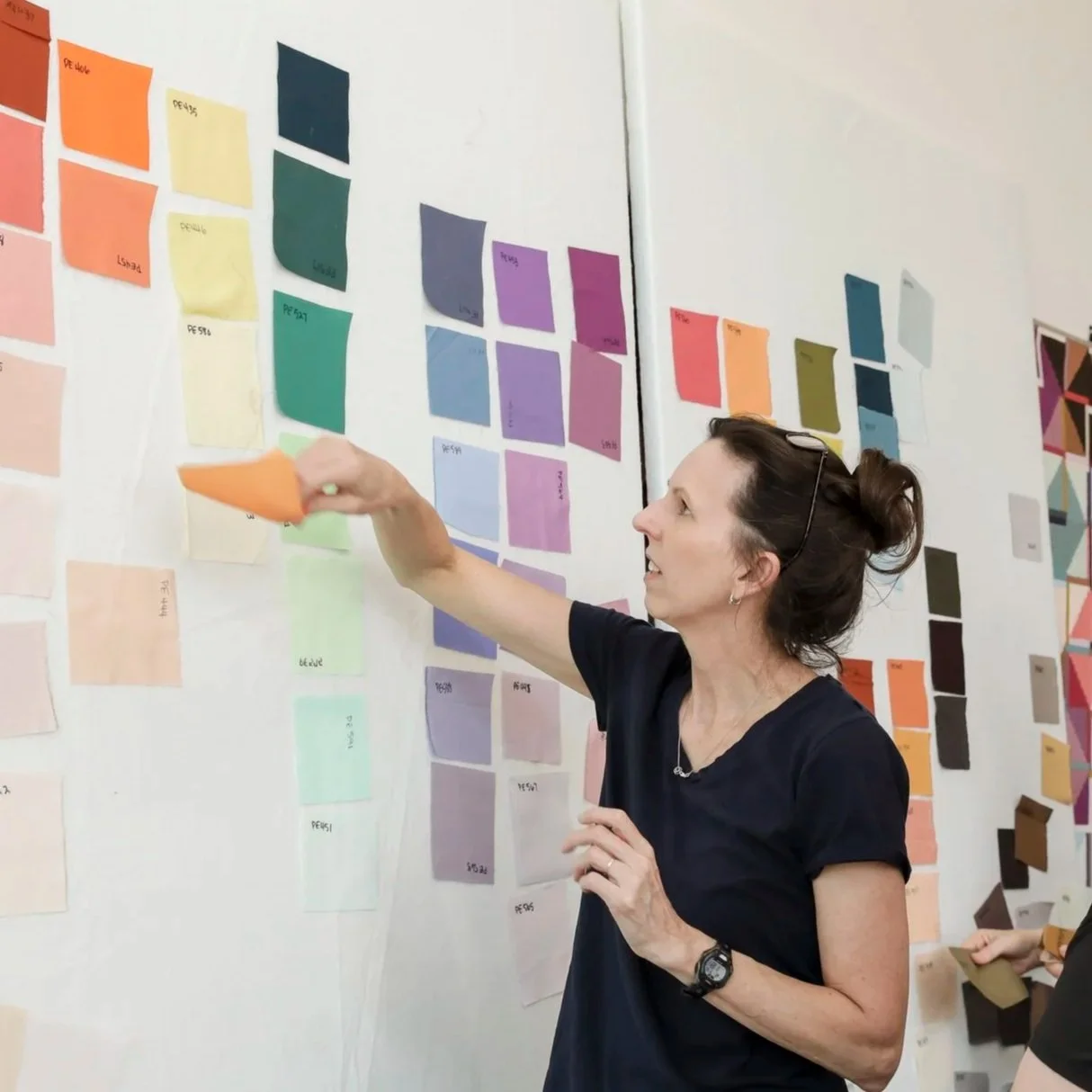
Kelly had pinks (which live on the red side of the spectrum), yellows, greens, violets, and a neutral. Mitzie laid them out in ROYGBIV order and then looked at how they connected.
Check Your Value: Light, Medium, and Dark
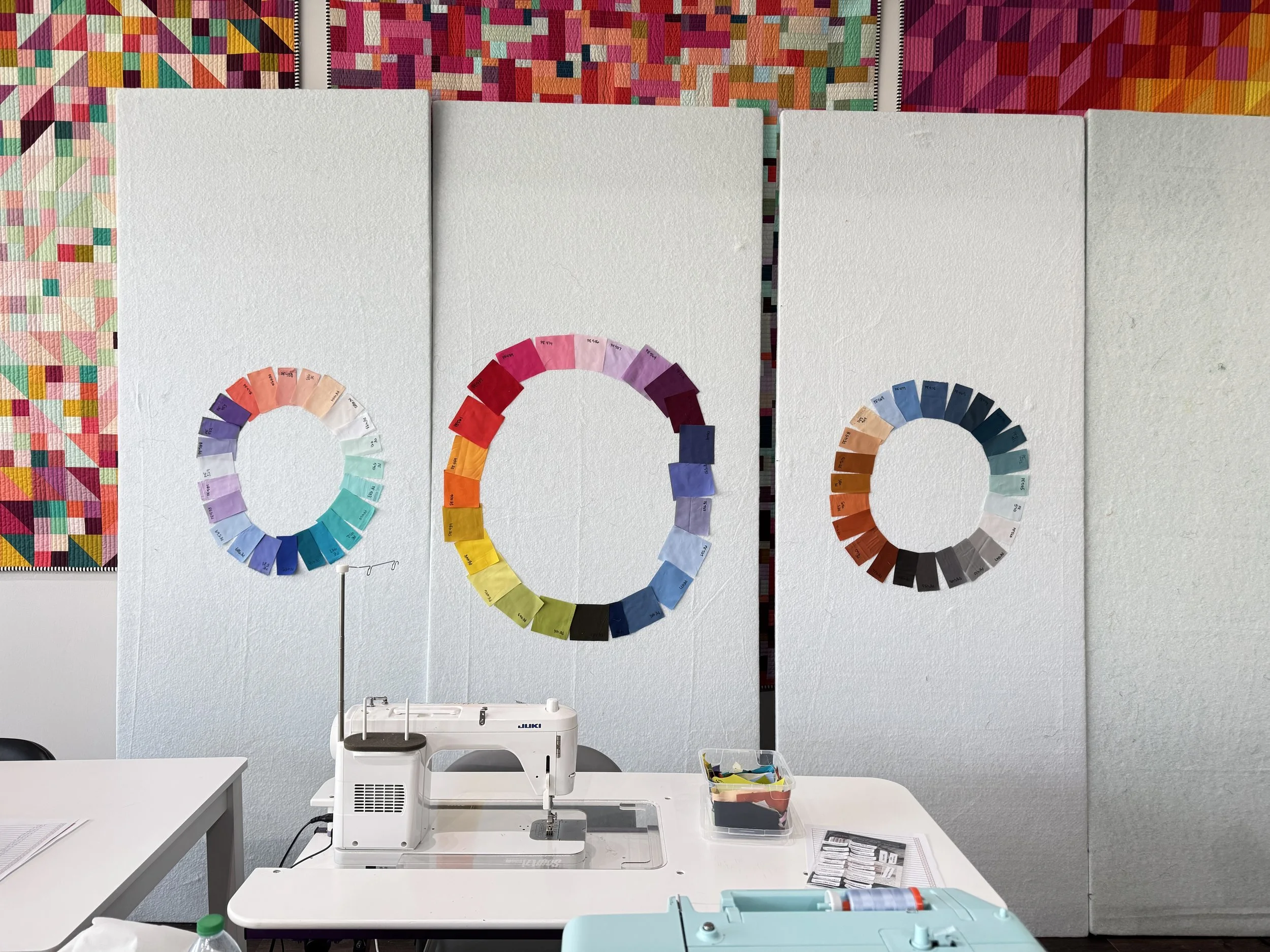
Once your colors are in order, the next thing to evaluate is value. Value refers to how light or dark a fabric is, independent of its color. A pale yellow and a pale violet might look very different in terms of hue (color), but if they are both very light, they have similar value.
Within each color family, you want to arrange your fabrics from light to dark. And then you want to check whether they connect well with the fabrics next to them in the ROYGBIV lineup. This is what creates smooth transitions across the surface of your quilt.
What to Do When Your Palette Is Not a Perfect Rainbow
Here is something that trips beginners up: you do not have to have every color of the rainbow in your quilt. Kelly did not have a true orange or a true blue, and that is completely fine. The Sidewalk Cracks pattern is a random layout, not a rainbow layout that goes corner to corner and back. In a random layout, the goal is to place your lightest fabrics in the center, your mediums toward the middle, and your darkest fabrics at the outer edges. That gives the quilt a sense of glow and movement without requiring a picture perfect ROYGBIV lineup.
Mitzie made one adjustment to Kelly's arrangement, moving a neutral so it sat next to a light yellow rather than interrupting the color flow elsewhere. Small moves like that can make a big difference in how the finished quilt feels.
Want to Go Deeper on Color?
If this lesson made you think, "I want to actually understand why this works," you are ready for the Color Flow Theory Workbook. It is a free 26-page workbook that explains the full framework Mitzie uses to build palettes that flow beautifully. You can find it at jitterywingsquiltco.com/color-flow-theory-course.
If you want an even deeper dive, the full Color Flow Theory Course is available on the Jittery Wings website as well. And if color selection still feels like too much and you just want fabric that you know will work together, you can order a curated fat quarter bundle directly from the Jittery Wings shop.
Ready for the Next Step?
Once your fabrics are pressed flat and your colors are in order, you are ready to cut. That is exactly what the next lesson covers. Subscribe to the Jittery Wings YouTube channel so you do not miss it, and grab your free Sidewalk Cracks pattern at jitterywingsquiltco.com/brave-beginner-quilt-course so you can follow along.
If you want ongoing support as you work through the course, the Hive+ community is the place for that. It is Mitzie's membership community, open to quilters at every level, and it is a genuinely great place to ask questions and get feedback on your work.