
What Is Bias in Quilting? (And How to Avoid Stretchy, Wonky Blocks)
If you’ve ever made a quilt block that looked perfect on the cutting mat but ended up wonky once sewn, bias is often the culprit. There was a time when I hated triangles for this exact reason. No matter how carefully I followed a pattern, things just didn’t line up.
Once I understood fabric grain and bias, everything changed.
This tutorial explains what bias is in quilting, why it causes fabric to stretch, and how to avoid it—especially when working with triangles.
(Watch the video below for a visual walk-through.)
What Does “Bias” Mean in Quilting?
Quilting cotton is made with two main sets of threads:
WARP: Lengthwise grain – runs parallel to the selvages
WEFT: Crosswise grain – runs perpendicular to the selvages
When you cut fabric along either grain, the threads remain long and continuous. This makes the fabric edge stronger and much less likely to stretch.
Bias occurs when fabric is cut diagonally across the grain.
Because there is no single thread running the full length of that cut edge, the fabric becomes stretchy and unstable.
This stretch is what causes blocks to distort, bow, or go out of square during piecing.
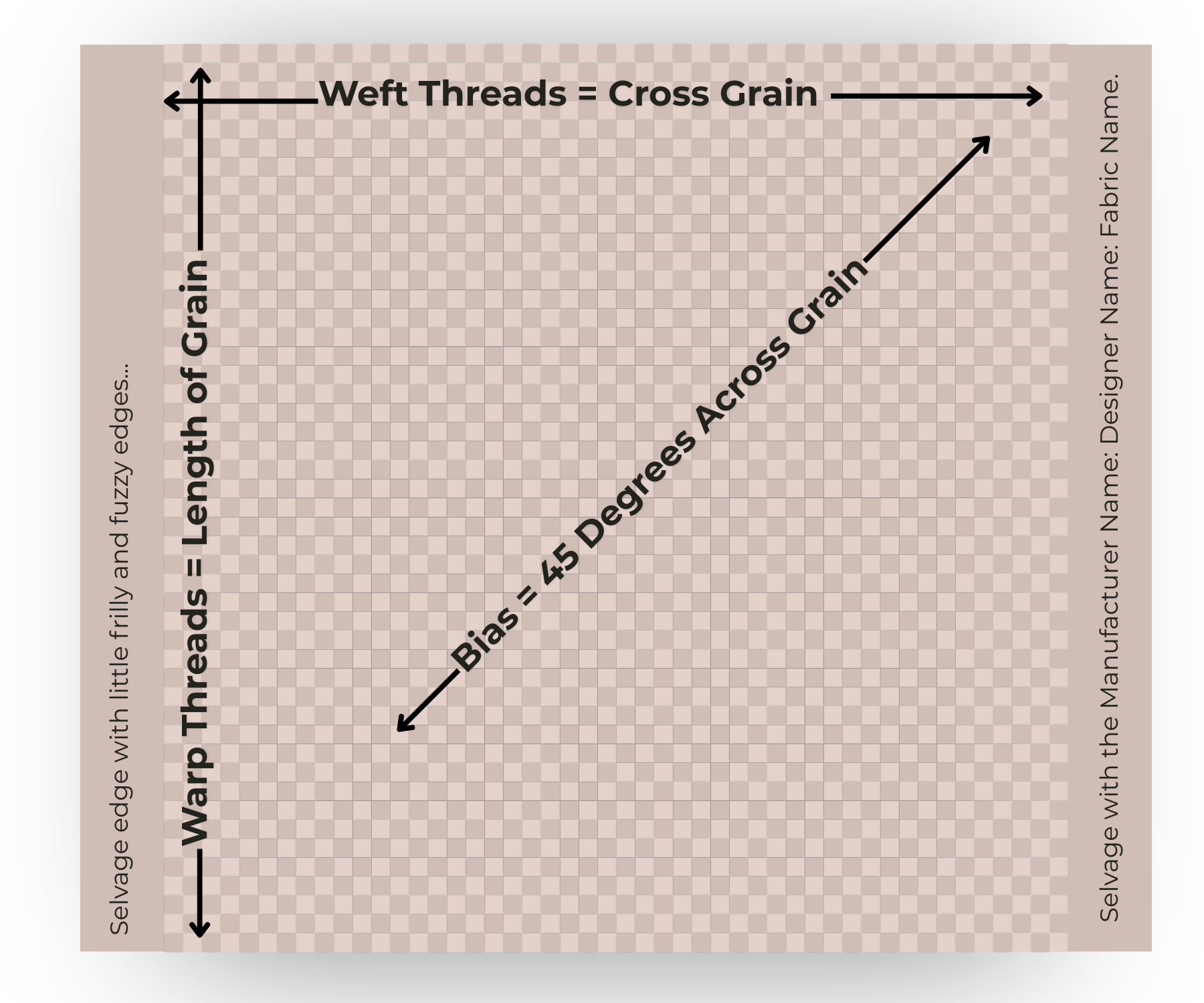
Why Cutting on Grain Matters for Quilts
When cutting basic quilt pieces, cutting on grain is essential for accuracy.
Cuts made along the warp or weft (lengthwise or crosswise grain):
Stretch less
Hold their shape better
Help your quilt top stay square
This is especially important for beginner quilters, where even small distortions can compound as blocks are sewn together.
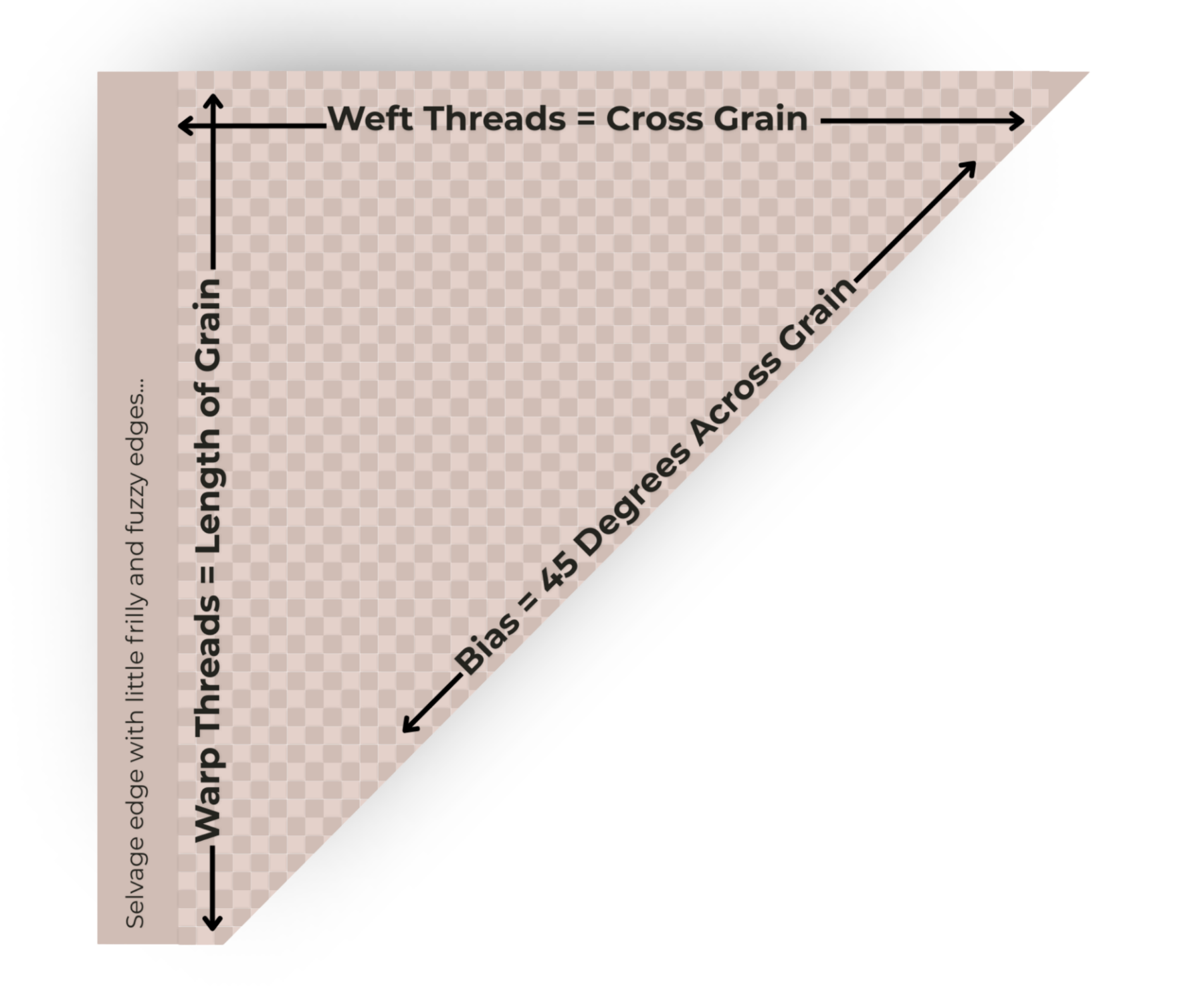
When Bias Is Useful in Quilting
Bias isn’t bad—it just needs to be used intentionally.
Because bias edges are stretchy, they work beautifully for:
Bias binding, especially on quilts with curves
Garment sewing and curved seams
However, bias edges are not ideal for basic quilt blocks, where stability matters more than flexibility.
One common place to be careful is fussy cutting. When cutting a specific motif from a fabric, it’s easy to accidentally place edges on the bias, which can lead to distortion during sewing.
What About Triangles in Quilting?
Triangles naturally involve diagonal cuts, which means bias can’t be avoided entirely—but it can be managed.
Half Square Triangles (HSTs)
Different construction methods handle bias differently:
2-at-a-time HSTs – bias is avoided
8-at-a-time HSTs – bias is avoided
4-at-a-time HSTs – every outer edge is on the bias
Because 4-at-a-time HSTs result in bias on all edges, they are more likely to stretch and become distorted. At Jittery Wings, we intentionally avoid this method in patterns because it often leads to frustration and wonky quilts.
Flying Geese
Flying Geese units can also introduce bias if constructed carelessly. To maintain stability, we recommend:
One-at-a-time method, or
No-waste method, both of which minimize bias on the outer edges
How to Avoid Bias Problems in Quilting
To reduce stretching and distortion:
Cut quilt pieces on grain whenever possible
Use triangle construction methods that minimize exposed bias edges
Handle bias edges gently—avoid stretching while sewing
Press carefully rather than aggressively ironing
Understanding bias gives you control. Instead of fighting your fabric, you’ll know why something feels unstable—and how to fix it.