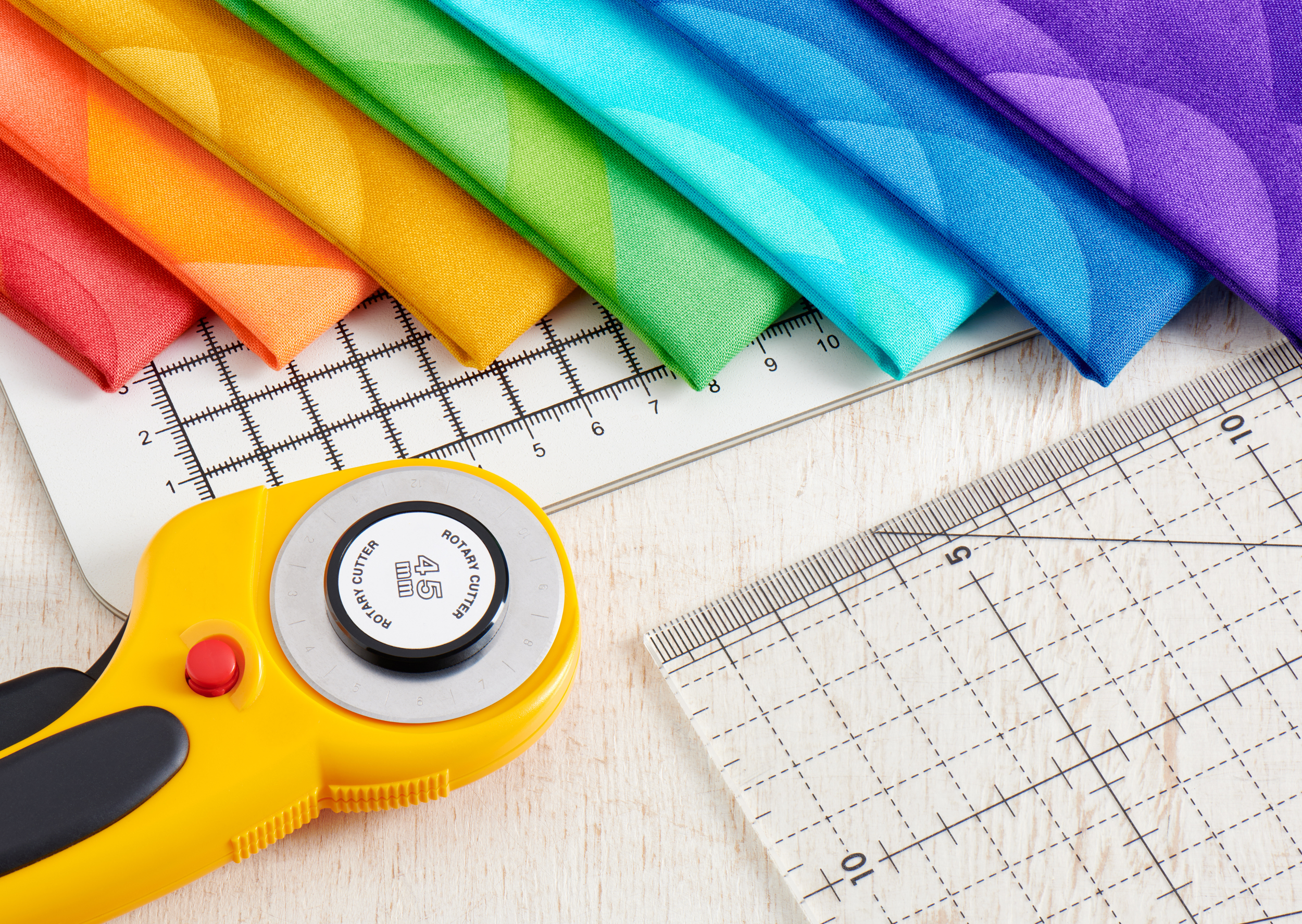
Learn How to Use a Rotary Cutter for Quilting
Rotary cutters are one of the most important tools in quilting—and once you learn how to use one properly, you may never reach for scissors again. I rarely use scissors when I quilt. A rotary cutter allows you to make clean, precise cuts that improve accuracy, save time, and make the entire quilting process more enjoyable.
If you’re new to quilting or still feel unsure using a rotary cutter, this lesson will walk you through the basics of rotary cutter safety, positioning, and cutting technique so you can cut fabric with confidence.
Rotary Cutter Safety and Setup Tips for Quilters
Before you start cutting, a few safety habits will make a big difference—especially if you quilt around children or pets.
Always close your rotary cutter blade after each cut. An open blade is an accident waiting to happen, whether that’s for your hand, a curious child, or a fur baby.
Cut away from your body or across the mat—never toward yourself. Your cutting motion should feel controlled and intentional, never rushed or angled back under your arm.
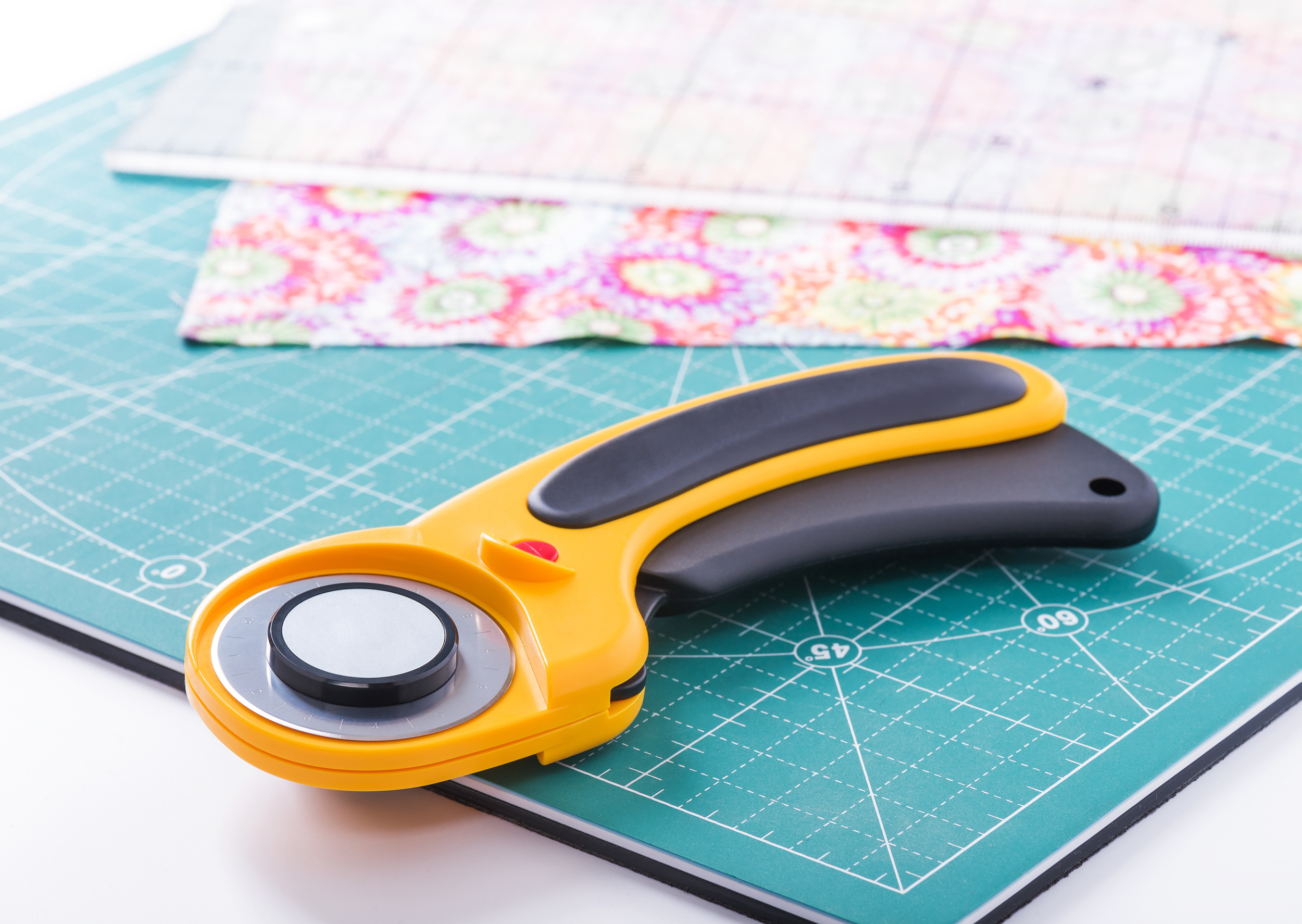
How to Cut Fabric with a Rotary Cutter (Step by Step)
Once you’re set up safely, these techniques will help you get accurate cuts every time.
Start with a clean edge.
Make your first cut to create a straight, clean line. Line up the edge of your ruler with a grid line on your cutting mat to ensure accuracy.
Use three points of pressure.
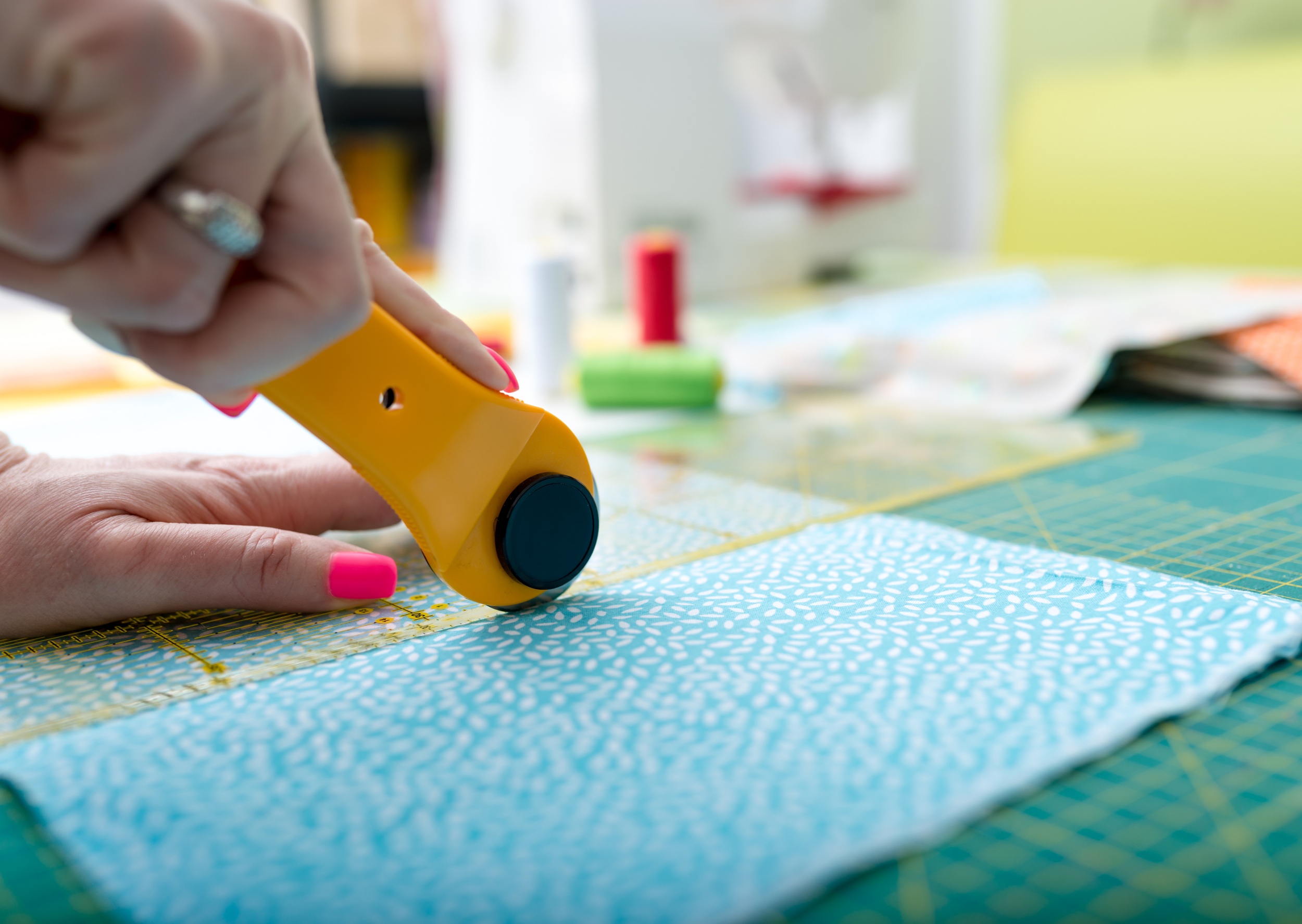
Keep at least three fingers applying pressure to your ruler. The strongest position is when at least one finger presses on both the ruler and the fabric near the edge.
Hold your rotary cutter straight up and down.
Your blade should be at a 90-degree angle to the mat so it rides cleanly along the ruler edge without wobbling.
Walk your hand up the ruler as you cut.
Maintain steady pressure as you move your hand along the ruler to keep it snug against the rotary cutter.
Check your blade if cuts skip.
If your rotary cutter skips or leaves uncut spots, your blade may be dull—or there could be lint or debris on your mat or fabric. A fresh blade makes a huge difference.
Measuring and Repositioning for Accurate Quilt Cuts
After your first edge is straight, rotate your fabric to line that edge up with a new grid line on your cutting mat. This sets you up for accurate measurements on your next cut.
Measure twice, cut once.
Count your measurement in both directions. Our eyes can play tricks on us, and double-checking prevents costly mistakes.
Rotate the ruler or fabric as needed.
Instead of reaching or stretching, turn the fabric or ruler so each cut feels comfortable and controlled.
Why Rotary Cutters Make Quilting Easier
Learning how to use a rotary cutter correctly opens up new possibilities in quilting—from faster cutting to more accurate piecing. With a few good habits and a sharp blade, cutting fabric becomes less stressful and far more enjoyable.